The bill just landed on the table. Everyone looks at you. You start to say, “We split it.” Then a tiny voice whispers, “Or was it splitted?” Suddenly you’re stuck. Your face feels warm. Sound familiar? Don’t worry. You’re not alone. That quick panic hits students, workers, and even native speakers. One small word can make a smart person doubt everything.
Relax. Here’s the secret behind Split or Splitted. The correct word is always split. It never changes. Not today. Not yesterday. Not after “have.” Splitted feels logical. After all, most verbs end in “-ed.” This one skips the rule. Think of cut and put. You’d never say cutted. In the next few minutes, you’ll learn the simple rule. You’ll also see clear examples. Ready to fix it for good? Let’s make it stick.
What Are You Looking For?
Did you type split or splitted into a search bar? You’re in good company. Thousands of people ask the same thing every month.
Maybe you need the split past tense for an email. Maybe a teacher marked your essay in red.
You may want to know:
- Is splitted a word? Is splitted correct English?
- What is the past tense of split?
- Is it has split or has splitted?
- How do you use split in a sentence?
- Good news. The answer is short and friendly.
Chat example:
“Split or splitted? Which one do I write?”
“Write split. It never changes.”
“Even for yesterday?”
“Even for yesterday.”
Quick Answer
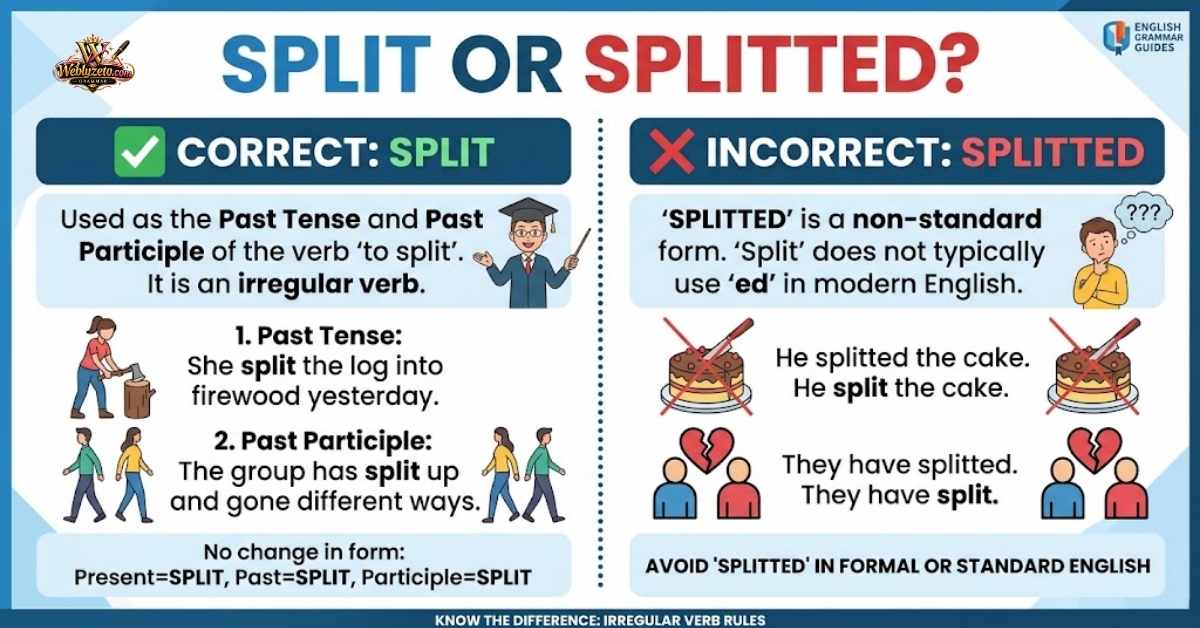
Here’s the quick answer to split or splitted. Use split. The past tense of split is split. The past participle is split too.
Think of it as split split split. One word does all three jobs.
Present: I split the cost with my sister.
Past: I split the cost last week.
Participle: I have split the cost twice.
Splitted fails in all three spots. Standard English usage doesn’t accept it. Merriam-Webster lists only split and splitting as forms.
That’s the whole rule. You can relax now.
Chat example:
“Quick check. What’s the past of split?”
“Split.”
“Not splitted?”
“Never splitted.”
Examples
Real sentences make the rule click. Here are split sentence examples for split or splitted.
Correct:
- ✅ We split the bill after dinner.
- ✅ She split the firewood yesterday.
- ✅ They have split the profits equally.
- ✅ The class was split into teams.
Incorrect: - ❌ We splitted the bill after dinner.
- ❌ She splitted the firewood yesterday.
- ❌ They have splitted the profits equally.
- ❌ The class was splitted into teams.
- Each correct line uses a plain split. Time words and helper verbs show the tense.
- Read them aloud. Your ear will soon trust the pattern.
Chat example:
“We splitted the cake.”
“We split the cake.”
“Ah. The past tense of split is split.”
Simple Origin or Background Explanation
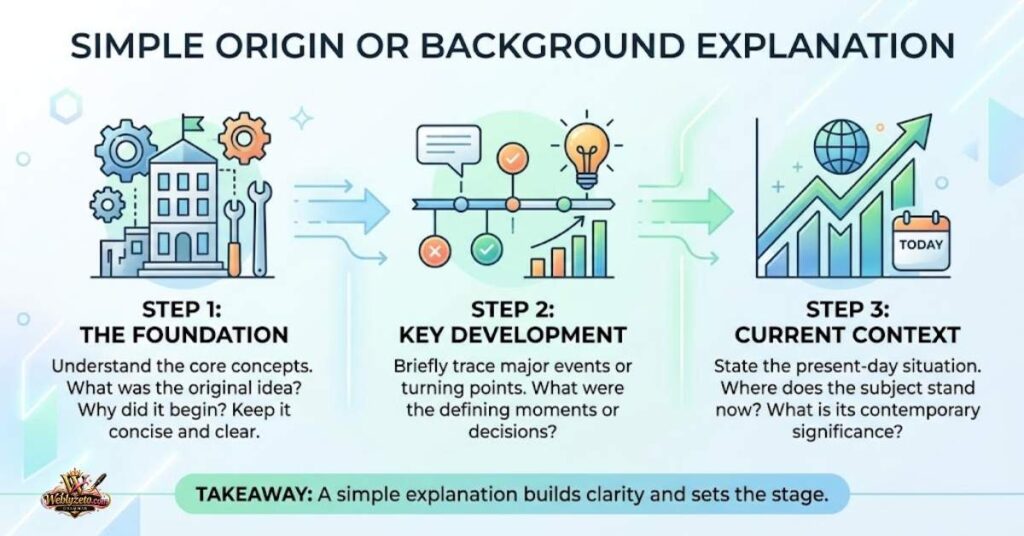
Where does the word come from? The history behind split or splitted is short and useful.
English borrowed the verb in the late 1500s. Etymonline traces it to a likely Low German source such as Middle Dutch splitten. Wiktionary puts its first recorded use around 1567. etymonline
The word arrived with identical past forms. No -ed ending ever became standard. That’s why split is an irregular verb.
Verbs that do not change in the past tense:
- cut
- put
- set
- hit
- shut
- You’d never say cutted or putted. Splitted deserves the same side-eye.
Chat example:
“Why isn’t it splitted?”
“The word came into English already finished.”
“Like cut and put?”
“Exactly like those.”
The Difference Between Split and Splitted
The gap in split or splitted is simple. One form is standard English. The other is a common slip.
Split works in every tense. Splitted works in none. Dictionaries, teachers, and editors agree on this point.
So why does the slip happen? Regular verbs take -ed. Walk becomes walked. Jump becomes jumped. Learners expect split to follow along.
Split: accepted, clear, and widely used.
Splitted: nonstandard and often marked wrong.
Remember one idea. When you need the past of split, choose split.
The next two sections zoom in on each word.
Chat example:
“My teacher circled splitted.”
“She was right. It should be split.”
“Okay. Lesson learned.”
Split
Split is the correct form in the split or splitted debate. It handles three jobs.
Present tense: I split my time between work and study.
Past tense: We split the costs yesterday.
Past participle: They have split into two groups.
Add -s for he, she, or it. Example: She splits the bill. Add -ing for action in progress. Example: He is splitting logs.
Split definition: to divide, break apart, or share. It also works as a noun, like a split in the party. Say it as /splɪt/ so it rhymes with sit.
Close synonyms include divide, separate, part, and cleave.
Chat example:
“Do I add -ed to split?”
“Never.”
“So split, split, split?”
“Exactly.”
Splitted
Splitted is the shaky half of split or splitted. Most style guides call it incorrect.
Is splitted a word? People type it, so it exists loosely. Still, it isn’t standard English. The splitted meaning is simply “divided.” Only the form is wrong.
You’ll spot it in these places:
- Learner writing
- Casual chats
- Forum posts
- Code comments
- Hunting for splitted synonyms? Skip them. Use split, divided, or separated instead.
- Treat splitted as a red flag. Spot it and swap it out.
Chat example:
“Can I write splitted is correct?”
“Not in standard English.”
“What should I write instead?”
“Write split is correct.”
Comparison Table
A table makes split or splitted easy to scan. Check each row.
| Feature | Split | Splitted |
| Standard English | Yes | No |
| Present Tense | Yes | No |
| Past Tense | Yes | No |
| Past Participle | Yes | No |
| Daily Use | Common | Rare |
| Example | We split the bill. | We splitted the bill. ❌ |
Split wins every row. Screenshot the table for later.
Here’s split vs. splitted in plain words:
- Split: Safe for emails, essays, and speech.
- Splitted: Risky anywhere readers will judge you.
Which One to Use and When
Choosing in split or splitted takes two seconds. Pick split.
Context only changes the helper words. Ask yourself two questions. Do I mean “break apart” or “share”? Which tense do I need? Neither answer changes the spelling.
Style still matters. In professional writing, division sometimes sounds sharper. In everyday conversation, split feels natural.
Split: casual, quick, shared or physical.
Divided: formal, careful, math-like.
Separated: pulling apart while keeping things distinct.
Broke apart: sudden or forceful breakage.
Chat example:
“Should I use split in a business email?”
“Yes. It’s perfectly fine.”
“And for legal papers?”
“Divided may sound better there.”
Read Also:Tying or Tieing (2026): What Is the Correct Spelling?
Use “Split” When
Use split in every case of split or splitted. The word stays steady while helper verbs shift.
Present tense: We split profits equally.
Past tense: They split the team yesterday.
Present perfect: The branch has split from the main company.
Passive voice: The log was split with an axe.
Phrasal verb: The couple split up.
Wondering about has split or has splitted? Choose has split. The same goes for have split or have splitted. Pick have split.
Even has been split or splitted has one answer. Say has been split.
Chat example:
“Has the group split yet?”
“Yes. It split an hour ago.”
“Great. Thanks.”
Avoid “Splitted”
Skip splitted in any split or splitted choice. It makes writing look careless. Readers may doubt your skills.
Watch for these slips:
- ❌ The class was splitted into groups.
- ❌ The couple splitted up.
- ❌ We have splitted the work.
Fix them fast: - ✅ The class was split into groups.
- ✅ The couple split up.
- ✅ We have split the work.
- Some people write “to be splitted.” Don’t. Write to be split.
- Proofread once before you hit send. A single -ed can undo good work.
Chat example:
“Is was split or was splitted right?”
“Was split.”
“Always?”
“Always.”
Easy Memory Trick
Here’s a trick for split or splitted. Say it three times: split, split, split.
Tap the beat on your desk. It works like a song chorus. Brains remember rhythm better than rules.
Another trick helps too. Picture a cut. You’d never say cutted. Cut stays cut. Split stays split.
Try this mini routine:
Say it aloud.
Write one sentence.
Use it in a text today.
After a week, the right form will feel automatic.
Chat example:
“How do I remember the past tense of split?”
“Chant it. Split, split, split.”
“Silly but easy.”
“That’s the whole point.”
Common Mistakes People Make
Even strong writers slip on split or splitted. These common English grammar mistakes follow a pattern. Most come from applying the regular verb rule.
Here are five frequent slips:
Adding -ed
Using splitted in the past tense
Using splitted after have
Using splitted in passive voice
Forgetting it’s an irregular verb
Each slip has a quick fix. Swap splitted for split.
Don’t feel bad. Many native speakers do it. Spot the pattern and you’ll fix it fast.
The next five sections break each mistake down.
Chat example:
“I keep making this mistake.”
“Try the chant. Split, split, split.”
“Okay. I’ll try it.”
Mistake 1: Adding “-ed”
The first slip in split or splitted is adding -ed. It feels logical. Regular verbs work that way.
Split is different. It skips the ending.
Common wrong forms:
- ❌ splitted
- ❌ splited
Right form: - ✅ split
Notice the extra problem with splited. Even if -ed were allowed, the t would double. So the spelling fails twice. - Adding ed to verbs works for walk, jump, and start. It fails for split, cut, and put.
- Quick fix: delete the ending. Then reread the sentence.
Chat example:
“I wrote splited.”
“Just write split.”
“No -ed at all?”
“None at all.”
Mistake 2: Using Splitted in the Past Tense
This one hits hardest in split or splitted. People talk about yesterday and reach for -ed.
- Wrong:
- ❌ We splitted the rent last month.
- ❌ He splitted the wood this morning.
- Right:
- ✅ We split the rent last month.
- ✅ He split the wood this morning.
The split past tense matches the present form exactly. A time word shows when the action happened.
Look for these clues: - yesterday
- last week
- ago
- earlier
- Spot the clue first. Then keep the verb as split.
Chat example:
“When did you pay?”
“We split the bill last night.”
“Did you say splitted?”
“Nope. I said split.”
Mistake 3: Using Splitted After “Have”
Perfect tenses cause trouble in split or splitted. After have, has, or had, people add -ed by habit.
- Wrong:
- ❌ They have splitted the company.
- ❌ She had splitted the cake.
- Right:
- ✅ They have split the company.
- ✅ She had split the cake.
This shows the past participle of split in action. It looks the same as the base form.
Searching for split past tense and past participle? One word answers both. It’s split.
Present perfect tense examples work the same way. I have split. She has split. We had split.
Chat example:
“Have you splitted the money?”
“Have I split the money? Yes.”
“Great. Send me my share.”
Mistake 4: Using Splitted in Passive Voice
Passive voice uses the past participle. That’s where split or splitted gets tricky.
- Wrong:
- ❌ The group was splitted into teams.
- ❌ The cost will be splitted evenly.
- Right:
- ✅ The group was split into teams.
- ✅ The cost will be split evenly.
The pattern is a form of be plus split. Whether you write was, is, been, or to be, the participle stays split.
More passive voice examples: - The bill is split every month.
- The files had been split earlier.
- Only the helper changes. The main verb stays put.
Chat example:
“Was the team splitted?”
“It was split.”
“Because the participle is split?”
“Right.”
Mistake 5: Forgetting It’s an Irregular Verb
The root cause behind split or splitted errors is simple. Learners forget the verb is irregular.
Regular verbs follow one rule. Irregular verbs follow many. Some change a vowel. Others never change at all.
Split belongs to the never-change group. These verbs share the same three forms:
- split, split, split
- cut, cut, cut
- put, put, put
- set, set, set
- hit, hit, hit
Learning irregular verbs in English works best in groups. Keep a short list at your desk. Add new verbs as you meet them.
Chat example:
“How do I spot irregular verbs?”
“Study them in families.”
“Like the no-change family?”
“Yes. Start there.”
Everyday Real Life Examples
Rules help. Real life helps more. Here’s how split or splitted plays out in daily situations.
Each section below shows the correct form in action. Read the lines aloud. Notice how natural split sounds.
You’ll visit six scenes:
- Emails
- News reports
- Social media
- School
- Home
- Work
- Pick the scene that matches your life. Borrow the sentences. Adjust the details.
- Repetition builds habit. Soon you’ll write with ease.
Chat example:
“Where do people use split the most?”
“Money talk and group talk.”
“Like bills and teams?”
“Exactly.”
In Emails
Emails need clear and friendly language. In split or splitted choices, split keeps things professional.
Try these lines:
- We split the project into smaller tasks.
- The work has been split among team members.
- Could we split the invoice in two?
- I split the file into three parts.
- Avoid this: ❌ We splitted the project.
- Short sentences work well in email. Reread before sending. A tiny slip can undo a polished message.
Chat example:
“Subject: Budget update.”
“Body: We split the budget across two quarters.”
“Looks great. Send it.”
In News Reports
News writing is tight and factual. For split or splitted, reporters always use split.
Typical lines:
- The political party split into two groups.
- The company has split its operations.
- Voters were split on the proposal.
- The court split five to four.
- Split also works as an adjective. Think a split decision or a split vote.
Reading the news is great practice. Watch for the word. You’ll rarely see splitted in professional reporting.
Chat example:
“What does a split vote mean?”
“Opinions were divided.”
“So it wasn’t unanimous?”
“Correct.”
On Social Media
Posts are fast and casual. Even so, split or splitted has a clear answer. Keep it split.
Examples:
- We split the dinner bill last night.
- My friends and I have split travel costs before.
- Can we split an order of fries?
- The group chat split into two camps.
- Typos happen in captions. Still, clean grammar earns trust.
- Short posts leave no room for confusion. A clean verb helps your message land.
Chat example:
“Draft caption: We splitted dessert.”
“Change it to: We split dessert.”
“Fixed. Thanks.”
At School
Classrooms are full of split or splitted moments. Teachers split students into groups all day.
Common lines:
- The teacher split the class into teams.
- The class has been split into smaller groups.
- Let’s split the reading between us.
- We split the homework into two parts.
- Students often write splitted in essays. Teachers circle it fast.
- Grammar rules for students stay simple here. One verb. Three forms. Zero changes.
- Try writing one sentence for each tense. The pattern becomes obvious in minutes.
Chat example:
“Why did I lose a mark?”
“You wrote splitted.”
“Should it be split?”
“Yes.”
At Home
Home life is full of sharing. Split or splitted comes up with food, chores, and costs.
Examples:
- We split the pizza into eight slices.
- The wood has split because of the heat.
- The kids split the chores this week.
- I split the grapes between two bowls.
- Nature uses the verb too. A dry board splits. A ripe fruit splits open.
- Talk to family members using the correct form. Repetition beats memorizing rules.
Chat example:
“Who split the cake?”
“I did.”
“Is there any left?”
“Half of it.”
At Work
Offices run on shared tasks. That’s why split or splitted matters at work.
Strong sentences:
- The manager split the workload equally.
- Responsibilities have been split among departments.
- We split the profits fifty-fifty.
- Let’s split the difference.
- Split the difference means meeting halfway on a price or deal.
Clean grammar signals care. Colleagues notice. Clients notice too. Use split with confidence in memos, chats, and reports.
Chat example:
“Can we agree on $500?”
“I offered $400. You wanted $600.”
“Let’s split the difference.”
“Deal.”
Short Learning Section for Students and Beginners
New to English? This is English grammar for beginners made easy. Learn split or splitted with one small table.
Base Form
Past Tense
Past Participle
split
split
split
Practice in three steps:
- Say each form aloud.
- Write three sentences.
- Read them again.
Try these: - I split the apple.
- I split the apple yesterday.
- I have split the apple.
- Beginners love this verb. After the first form, nothing new needs memorizing.
- Flashcards help. Write the verb on one side. Write three sentences on the back.
Chat example:
“Is the split past tense hard?”
“No. It’s the same word.”
“Even the participle?”
“Yes.”
FAQs
Is splitted correct English?
In Split or Splitted, splitted is not standard English. Dictionaries list only split. Always choose split in writing and speech.
Is split the past tense?
Yes. In Split or Splitted, split is the past tense. It matches the present form. Time words show when it happened.
Is split the past participle?
Yes. In Split or Splitted, split is also the past participle. Say have split or was split. Never add an -ed ending.
What is the correct verb pattern?
The pattern in Split or Splitted is split, split, split. The base form, past tense, and past participle all match.
Can I say has splitted?
No. In Split or Splitted, the right phrase is has split. Helper verbs never change the form of split.
Why do people say splitted?
Most English verbs end in -ed. So in Split or Splitted, people guess the same rule. Split is an irregular verb.
Are there any situations where splitted is used?
Rarely. In Split or Splitted, you may see splitted in casual posts or tech notes. It still isn’t standard English.
How can I remember the difference?
To remember Split or Splitted, chant split, split, split. Link it to cut and put. Neither takes an -ed ending.
Conclusion
The debate over Split or Splitted ends here. The answer is clear. Use split every time. It works in the present tense. It works in the past tense. It also works after have, has, and had. Splitted may look logical but it isn’t standard English. Most verbs add -ed. This one doesn’t. Once you know that, Split or Splitted is no longer a puzzle.
Remember the easy trick. Say split, split, split. Link it to cut and put. Those verbs never change either. Next time Split or Splitted pops up, you’ll know what to do. Write split and move on. Your emails will look sharper. Your essays will earn better marks. Share this tip with a friend who still gets stuck on Split or Splitted. A small fix like this makes a big difference. Keep practicing and the habit will stick.

Reyansh is a passionate English language and grammar writer who enjoys making grammar, spelling, vocabulary, and writing concepts simple and easy to understand. With a focus on clear explanations and practical examples, Reyansh creates helpful content for students, writers, and everyday English learners. His goal is to make learning English more enjoyable, useful, and accessible to everyone.