Naive or nieve? You type it, stare at it, and doubt yourself. Sound familiar? It happens to almost everyone. Many writers feel stuck on naive or nieve, even after years of writing English. One wrong letter can make your email look careless. Nobody wants that. It’s a small word with a big sting. Good news: the fix takes only two minutes.
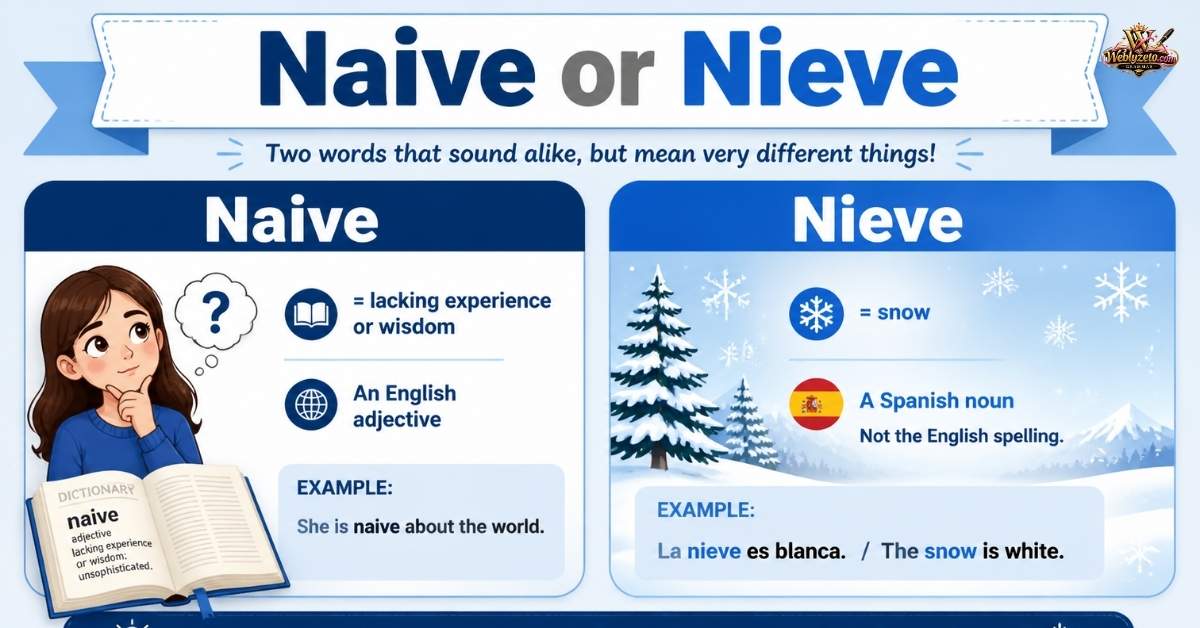
Here’s the quick answer. Naive is the correct spelling. Nieve is a mistake in English. It only works in Spanish, where it means snow. So the naive or nieve question has a simple fix. Write naive, with the “a” first. In this guide, you’ll learn why people mix them up. You’ll also get easy tricks to remember the right spelling. Plus, you’ll see real examples you can use today. Ready to settle naive or nieve for good? Let’s start.
Quick Answer
Naive is the correct spelling. Nieve is an incorrect spelling, and it isn’t an English word at all.
So if you want to spell nieve correctly, the fix is simple. Write it as naive, with the “a” before the “i.”
The naive meaning is simple too. It describes someone innocent, trusting, or short on experience. For example, “She was naive about office politics.”
Simple Background
The word naive comes from French origin. It’s the feminine form of “naïf,” which traces back to the Latin word “nativus,” meaning natural or born. English borrowed it in the 1600s.
That history explains the odd look of the word. French words often stack vowels that English readers don’t expect. Your eyes see “ai” and your brain wants to swap it.
The swap is where nieve sneaks in. Nieve spelling shows up because the vowel order feels reversible. It isn’t. English settled on one form, and that’s the one dictionaries list.
There’s another twist. In Spanish, “nieve” is a real word, and it means snow. So you might have seen it somewhere legitimate, which makes the spelling confusion even stronger.
Clear Explanation of the Difference
The difference is simple. One is a real English adjective, and the other is a typo.
Let’s look at each, so you can see why the gap matters in English vocabulary and English grammar.
What Is “Naive”?
Naive is an adjective in English. It describes a naive person who believes too easily or hasn’t learned how the world works. Think of a kid who hands over lunch money to a stranger.
You can also use it for choices. A naive decision is one made without enough facts. A naive mistake is an error that comes from missing experience, not bad intent.
The naive definition and examples are easy to spot. “He was naive to trust a stranger online.” “It’s naive to expect a refund without a receipt.”
Pronunciation helps too. Say it as “nye-EEV,” with a clear beat on each vowel. That word pronunciation matches the spelling patterns of the real word.
What Is “Nieve”?
Nieve has no place in English dictionaries. If you ask “is nieve a word,” the honest answer is: only in Spanish. There it means snow.
So the nieve meaning English speakers hope for doesn’t exist. The nieve meaning english search usually leads to a spelling slip, not a definition. People type it because they remember the sound, not the letters.
When you see “nieve” in an English sentence, treat it as one of those common spelling errors. Autocorrect will often flag it, though not always. Don’t count on it.
Comparison Table
Sometimes a quick side by side does the job. Here’s naive vs nieve at a glance.
| Feature | Naive | Nieve |
| Correct in English? | Yes | No |
| Part of speech | Adjective | None in English |
| Meaning | Innocent, trusting, inexperienced | Snow (Spanish only) |
| Origin | French, from Latin “nativus” | Spanish |
| Pronunciation | nye-EEV | NYEH-veh (Spanish) |
| Safe for formal writing? | Yes | No |
The table shows the nieve vs naive difference in seconds. Only one column holds a word you can use in an English essay.
Which One to Use and When
Use naive every time you write in English. There’s no situation where nieve wins. That includes emails, essays, texts, and captions.
The only exception is Spanish. If you’re writing in Spanish and mean snow, then “nieve” is perfect. Otherwise, stick with naive.
You might also see naïve, with two dots over the “i.” That version is fine, and we’ll cover it below. Both are accepted, so pick one and stay consistent.
Read More:Labelling or Labeling: What’s the Correct Spelling? (2026)
Simple Tip to Remember
Here’s a memory trick that works. Picture the word as “na” plus “ive.” Both halves start with a vowel sound that matches the sound you hear.
Another way to remember naive spelling is the phrase “Nana is innocent.” Nana starts with “na,” and so does naive. Silly? Yes. Effective? Also yes.
You can also link it to “native.” Both words share the same Latin root, and both start with “na.” That small link keeps the correct word usage stuck in your head.
Common Mistakes People Make
Even strong writers trip on this one. The errors below come up again and again, so watch for them.
Mixing Letter Order
This is the big one. People flip “ai” into “ie” because the pair feels interchangeable. That’s how nieve appears.
The old rhyme “i before e, except after c” doesn’t help here. Naive is an exception that the rule never covered. So trust the dictionary, not the rhyme.
Forgetting Pronunciation Patterns
Some people say “nive,” skipping the middle sound. Then they write what they hear, and the letters drift. A naive spelling mistake often starts with a sloppy sound.
Slow down and say it in two clear beats. “Nye-EEV” has a long “i” followed by a long “e.” Once you hear both, the vowel order locks in.
Confusing It With Other Words
Naive often gets mixed up with “native,” “naivety,” or “nave.” Each one means something different. A nave is part of a church, for instance.
Also, “naivety” and “naïveté” are the noun forms. Don’t swap the adjective and the noun by accident. If you describe a person, use naive. If you describe the quality, use “naivety.”
Everyday Real-Life Examples
Rules feel dry until you see them at work. Here are real settings where this spelling confusion pops up.
In Emails
Imagine you’re writing to your manager. You want to say a plan misses some risks. You’d write, “I think the timeline is a bit naive.”
Typing “nieve” there looks sloppy. In formal writing, small slips cost you credibility. Take two seconds and check the spelling before you hit send.
In Messages
Texting is casual, but spelling still shows. A friend says, “I trusted him with my password.” You reply, “That was naive, buddy.”
Fast typing makes spelling mistakes common here. Your phone may even fix it for you. Still, knowing the right form means you won’t rely on luck.
On Social Media
Captions and comments go public fast. A post like “Naive me thought the sale ended Friday” reads fine. “Nieve me” reads like a typo, and someone will point it out.
Hashtags also stick around. If you tag a post with the wrong form, it stays wrong. So double check before you publish.
In Daily Life
You’ll hear naive in real talk all the time. “I was naive about renting my first apartment.” “That’s a naive view of how taxes work.”
The word fits many moments. It never has to sound harsh. Often it just means you didn’t know yet, and that’s okay.
Naive vs. Innocent vs. Inexperienced
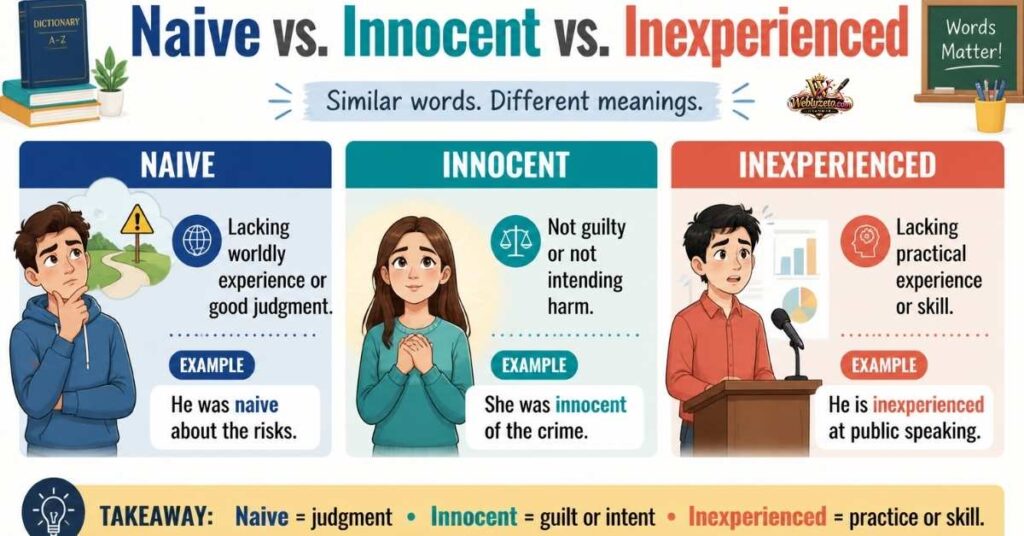
Three ideas overlap here, and they’re easy to blur. Naive vs innocent is the first pair. Innocent often means free from guilt, while naive means lacking worldly knowledge.
Then there’s naive vs inexperienced. Someone inexperienced simply hasn’t done something before. A naive person goes further, because they also expect things to go smoothly.
Here’s a quick example. A new intern is inexperienced. An intern who believes every promise in a pitch is naive. The tone is different, so choose carefully.
Naive Synonyms Worth Knowing
Sometimes you want a different word. Synonyms for naive include gullible, trusting, unworldly, green, and credulous. Each one has a slightly different flavor.
“Gullible” is the sharpest. It suggests someone who’s easily fooled. “Trusting” feels softer, and it can even sound kind.
Using naive synonym words also helps your English vocabulary. You avoid repeating one word again and again. Your writing feels fresher, too.
Naïve With the Diaeresis
You might wonder about naive vs naïve. Both are correct. The naïve with diaeresis version keeps the two dots from French.
Those dots tell you to pronounce the “i” separately from the “a.” In English, most writers drop them for speed. Style guides vary, so check the one you follow.
Neither form allows “nieve.” Whether you add the dots or not, the letter order stays the same. Only the accent mark is optional.
Short Learning Section for Students
If you’re one of the English learners reading this, good news. This spelling is easy to fix with a small routine. Follow the four steps below.
Keep it light and short. Five minutes a day beats one long cram session. That’s how English language learning actually sticks.
Step 1: Learn the Correct Form
Start by writing naive three times in a notebook. Say it out loud as you go. Seeing and hearing it together builds a strong link.
Then write one short naive in a sentence example. “My little brother is naive about money.” Personal sentences stay in memory far longer.
Step 2: Practice
Next, write five examples of naive in sentences. Use different topics, like school, work, and travel. This builds real spelling practice.
Try a mini quiz with a friend. Have them say a sentence, and you write the word. It turns a dull task into a small game.
Step 3: Use a Memory Trick
Pick one trick and commit to it. Maybe “Nana is innocent,” or the link to “native.” Whichever one makes you smile is the right one.
Say it each time you type the word. After a week, the trick fades and the habit stays. That’s the goal.
Step 4: Check Spelling Carefully
Always reread before you submit homework or a post. Look at the word letter by letter. Slow reading catches what fast reading misses.
Also use a dictionary now and then. It confirms the correct English word and shows the pronunciation. Over time, you’ll trust your own eyes more.
FAQs
Is “Nieve” a Word in English?
No, nieve is not an English word. It only exists in Spanish, where it means snow.
What Is the Correct Spelling: Naive or Nieve?
The correct spelling is naive. Write the “a” before the “i” every time.
What Does Naive Mean?
Naive means innocent, trusting, or lacking experience. A naive person believes things too easily.
Is “Naïve” With Two Dots Also Correct?
Yes, naïve is also correct. The dots come from French and are optional in English.
How Can I Remember the Spelling of Naive?
Link it to the word “native.” Both start with “na,” so the correct spelling sticks.
Conclusion
So, naive or nieve? The answer is naive. Nieve is a spelling mistake in English. It only works in Spanish. Now you know why people mix them up. You also know the simple tricks to avoid the error.
Keep the “native” trick in mind. Say the word slowly and check the letters before you hit send. Small habits fix big spelling problems. Did this guide help you? Share it with a friend who struggles with spelling. Then tell us your own memory trick in the comments.

Reyansh is a passionate English language and grammar writer who enjoys making grammar, spelling, vocabulary, and writing concepts simple and easy to understand. With a focus on clear explanations and practical examples, Reyansh creates helpful content for students, writers, and everyday English learners. His goal is to make learning English more enjoyable, useful, and accessible to everyone.