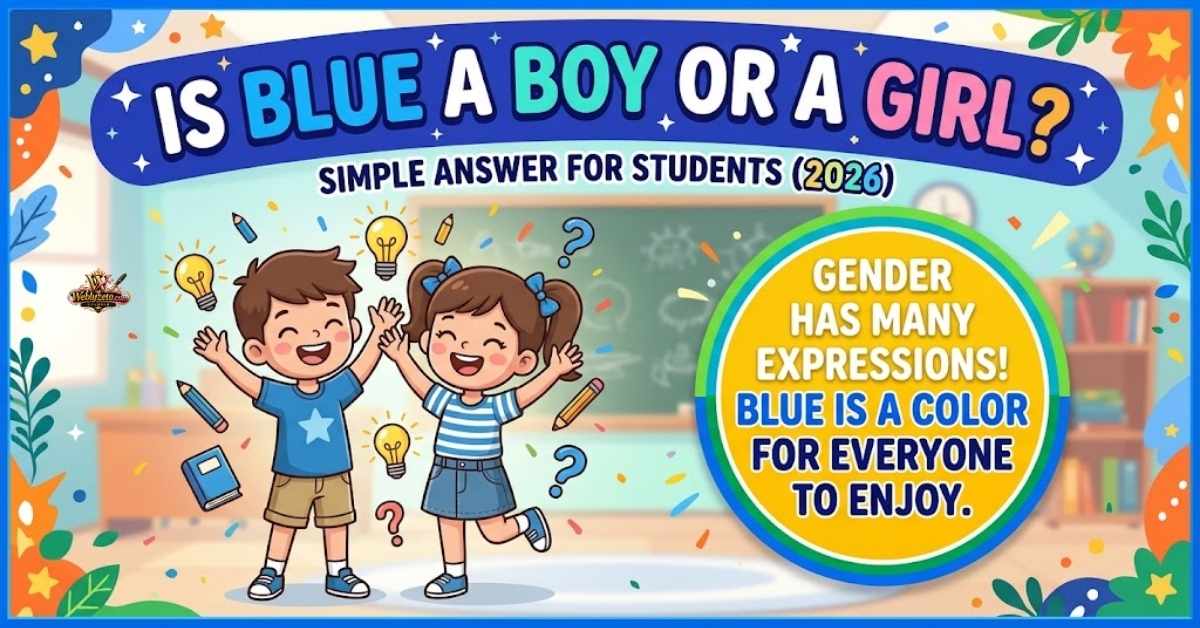
Have you ever wondered whether Blue is a boy or a girl? Many people ask this question because the color blue is often linked to boys. However, the answer depends on which character you mean. Blue from Blue’s Clues is a girl puppy. She loves playing games and solving clues with her friends. Her character shows that colors do not decide gender.
The question Is Blue a Boy or a Girl can also refer to other famous characters. For example, Blue from Jurassic World is a female Velociraptor. Bluey and Bingo are girls in the Bluey cartoon. Magenta from Blue’s Clues is also a girl puppy. These characters may share similar names or colors, but each has a different story. In this guide, you will learn about these characters and understand why people often connect blue with boys.
What Are You Looking For?
People search for this topic for different reasons.
Some want to know whether Blue from Blue’s Clues is a boy or a girl, while others want to understand whether blue is traditionally a masculine or feminine color.
If you’re asking about the cartoon, Blue is a girl.
If you’re asking about clothing, toys, or color preferences, blue works for everyone, regardless of gender.
Quick Answer
- Is Blue from Blue’s Clues a boy or a girl? Blue is a girl puppy.
- Is blue a boy or girl color? Blue is traditionally associated with boys in many modern Western settings, but it isn’t exclusively for them.
- Can girls wear blue? Yes, girls can wear blue clothing, choose blue toys, and enjoy the color.
- Can boys wear blue? Yes, boys can wear blue, pink, or any other color they like.
- Does blue determine gender? No, a person’s clothing or favorite color doesn’t determine their gender identity.
The important distinction is between a fictional character’s identity and a social convention about colors.
Once you separate those ideas, the question becomes much easier to answer.
Origin and Background of Blue
Blue is one of the main characters in the children’s television show Blue’s Clues, which first premiered in 1996.
Blue is a girl puppy who communicates through barks that her human friends understand.
The show encourages children to observe their surroundings, recognize patterns, and solve simple problems.
Blue’s bright color makes the character easy to recognize, but her gender comes from the show’s established character identity, not the color of her fur.
Why Is Blue Famous?
Blue became recognizable through her playful personality and the paw-print clues she leaves throughout each episode.
Viewers help the show’s host find those clues and work out what Blue wants to do.
The character also gives young children opportunities to practice observation, communication, and problem-solving.
That educational role matters more than whether viewers associate blue with boys or girls.
Why People Think Blue Is a Boy
People often connect Blue with boys because blue appears frequently in boys’ clothing, toys, and nursery designs.
However, these familiar associations reflect cultural traditions rather than a rule about gender.
The same assumption can affect how people interpret cartoon characters.
If viewers notice a blue character before learning anything about its personality or background, they may make a quick guess.
1. The Color Blue
In many modern Western settings, blue color for boys has become a familiar convention.
Stores often use blue packaging and clothing designs to appeal to parents shopping for boys.
This association can influence how viewers interpret characters, including Blue from Blue’s Clues.
Still, is blue a boy or girl color is a question about social expectations, not a biological fact.
2. The Name “Blue”
The character’s name comes directly from her blue appearance.
Because people often connect the color with boys, they may assume the character is male without checking the show’s information.
But a name based on color doesn’t establish gender.
The same principle applies to other fictional characters whose names describe their appearance, personality, or special abilities.
3. Cartoon Style

Cartoons sometimes use clothing, hairstyles, voices, and other visual details to signal a character’s identity.
When those signals don’t match familiar expectations, viewers may become uncertain.
Blue doesn’t need to wear a dress or use stereotypically feminine colors to be a girl.
Her identity is established by the show, so viewers don’t need to guess from her appearance.
4. People Guessing Without Watching Carefully
Someone who has never watched Blue’s Clues may recognize Blue from a picture or a short social media clip.
Without the show’s context, it’s easy to make an incorrect assumption.
Checking a reliable character description takes less effort than arguing over a guess.
For students, this is a useful reminder to verify information before repeating it.
The Real Difference: Color vs Gender
A color is a visual characteristic, while gender identity relates to a person’s understanding of their own gender.
These concepts aren’t interchangeable, and a person’s favorite color doesn’t establish their gender.
For example, a boy might love pink, while a girl might prefer dark blue.
Neither preference makes the person unusual or changes who they are.
The phrase is blue a girl or a boy can therefore refer to two different questions.
If Blue means the cartoon puppy, she’s a girl; if blue means the color, it has no gender.
Comparison Table
The following table separates facts about the character from common ideas about colors.
It can help students answer the question accurately without confusing a cartoon’s identity with clothing traditions.
| Question | Correct Answer |
| Is Blue from Blue’s Clues a boy or a girl? | A girl puppy |
| Is blue a boy’s color? | Traditionally associated with boys in many Western settings |
| Is blue a girl’s color? | Yes, girls can wear and enjoy blue |
| Is blue a gender-neutral color? | It can be used as a gender-neutral choice |
| Does blue determine gender? | No |
| Can boys wear pink? | Yes |
| Can girls wear blue? | Yes |
| Is Blue a real dog? | No, Blue is a fictional character |
Remember that a tradition isn’t the same as a requirement.
People can follow, adapt, or ignore color conventions according to their preferences.
Read More:Split or Splitted? Which One Is Correct? (2026)
Which One Should You Say?
If someone asks whether Blue from Blue’s Clues is a boy or a girl, say that Blue is a girl puppy.
This answer is clear and accurate because it reflects the show’s established character identity.
If someone asks whether blue is a masculine or feminine color, explain that many Western cultures associate it with boys.
Then clarify that blue color for girls is just as acceptable because clothing choices don’t belong exclusively to one gender.
When you’re unsure about a fictional character, check the show’s official information or a reliable reference.
Avoid using clothing, color, or appearance as your only evidence.
Common Mistakes People Make
A common mistake is treating a familiar social convention as a universal fact.
Another is assuming that a cartoon character’s appearance tells the whole story.
These errors can lead to confusion in classroom conversations, online discussions, and everyday life.
Understanding the difference between an established fact and a personal assumption makes the answer easier to explain.
Mistake 1: Assuming Blue Means Boy
People may assume Blue is a boy because blue commonly appears in boys’ clothing.
However, the Blue’s Clues character is a girl, regardless of her fur color.
The lesson is simple: colors associated with gender don’t determine a character’s identity.
Always check reliable information before deciding.
Mistake 2: Guessing Without Checking
A picture or a short video might not provide enough information to identify a character correctly.
Making a confident statement without checking can spread an incorrect answer.
Look for official descriptions or episodes that establish the character’s identity.
A quick fact-check is especially useful when preparing school assignments or answering questions online.
Mistake 3: Confusing Blue With Other Cartoon Dogs
Several children’s shows feature animated dogs, and their designs can look similar at first glance.
Remembering one character’s name or color doesn’t guarantee that you’ve identified another correctly.
Check the show’s title and character description before comparing them.
In this case, the relevant character is Blue from Blue’s Clues, not another blue-colored cartoon animal.
Mistake 4: Thinking Cartoons Must Show Gender With Clothes
Some viewers expect girl characters to wear pink or dresses and boy characters to wear blue or trousers.
These are gender stereotypes, not requirements for character design.
A character can communicate personality and identity through actions, dialogue, relationships, and the show’s story.
Clothing and color alone don’t provide a reliable way to determine gender.
Everyday Real-Life Examples
The difference between traditional gender norms and personal preferences appears in everyday situations.
Understanding these examples helps students explain why people associate colors with gender without treating those associations as rules.
Social Media Discussions
Online discussions about whether blue is for boys or girls often begin with a photo, cartoon, or clothing choice.
Some people repeat familiar traditions, while others point out that anyone can enjoy any color.
Before joining a discussion, check whether the question concerns a fictional character or a color preference.
A clear answer supported by facts is more useful than arguing over stereotypes.
Classroom Discussions
A teacher might ask students to name colors they associate with different objects or activities.
Students can explain their choices while learning that personal preferences differ.
For example, one student might choose blue for a schoolbag, while another prefers yellow.
Neither choice says anything definite about their gender, personality, or abilities.
Family Conversations
Families sometimes choose baby boy colors or baby girl colors when buying clothes, decorating nurseries, or planning celebrations.
These choices may reflect family traditions, shopping habits, or personal taste.
Other families choose green, yellow, purple, or blue for every child.
Both approaches are personal decisions, and no single color choice is necessary for raising a child.
News and Entertainment Articles
Articles about children’s fashion often discuss how clothing reflects social expectations.
These stories can explain why certain colors become popular for particular groups.
When reading such articles, distinguish historical evidence from opinions about what people should wear.
Reliable reporting explains the context instead of presenting a cultural habit as a universal truth.
The History of Blue and Pink Gender Associations
The familiar pairing of pink for girls and blue for boys hasn’t always been consistent.
Historical clothing traditions changed over time, particularly in Western countries.
In the early twentieth century, some American publications recommended pink for boys and blue for girls.
However, historical evidence isn’t completely consistent, so it’s misleading to claim that every society followed one rule before suddenly reversing it.
By the middle of the twentieth century, the modern association between blue and boys and pink and girls became more firmly established in American children’s clothing.
Retailers, advertising, and changing shopping habits helped reinforce these conventions.
The key takeaway is that the history of gender-specific colors involves changing customs rather than an unchanging rule.
What seems traditional today may have looked different to earlier generations.
Are Blue and Pink Gender-Specific Colors?
Blue and pink are often treated as gender-specific colors in clothing departments, advertisements, and baby products.
However, their association with boys or girls comes from social conventions rather than a fixed property of the colors themselves.
The meaning of blue color can also change with context.
People may associate blue with calmness, trust, the sky, or water, while others simply enjoy how it looks.
Likewise, pink can suggest sweetness, warmth, or playfulness in some settings.
Neither color belongs exclusively to one gender, and individual preferences vary widely.
Gender-Neutral Colors for Babies
If you’re choosing clothes for a newborn, gender-neutral colors can make shopping simpler.
Green, yellow, white, beige, gray, and many shades of blue work well for children of any gender.
These colors can also make it easier to reuse clothing for younger siblings.
Instead of buying everything according to traditional categories, choose items based on comfort, practicality, and the family’s taste.
There isn’t a required list of colors for a gender-neutral wardrobe.
Parents can mix bright shades, pastels, and darker tones to create a collection that suits their needs.
How Culture Influences Color Preferences
Cultural color associations influence how people interpret clothing, toys, decorations, and even cartoon characters.
A color that signals one thing in a particular community may carry a different meaning elsewhere.
Western advertising has helped spread familiar pink-and-blue conventions, but color preferences still vary between families and communities.
This makes it more accurate to describe blue as traditionally associated with boys in many Western settings than to call it a universal boy’s color.
The first statement explains a social pattern, while the second wrongly turns that pattern into a rule.
Understanding cultural differences helps people avoid assumptions about others.
Is Blue a Boy or a Girl in Deltarune?
In Deltarune, the answer depends on which character you’re calling Blue.
The game features characters with different appearances, so it’s important to identify the exact character before assigning a name or gender.
Don’t confuse Blue from Deltarune with Blue from Blue’s Clues.
They belong to different fictional worlds, and their identities shouldn’t be treated as interchangeable.
Is Blue a Boy or a Girl in Jurassic World?
In Jurassic World, Blue is a female Velociraptor who appears in the dinosaur storyline.
She is known for her blue markings and her connection with Owen Grady.
Blue’s name comes from the distinctive blue stripe along her body.
In this case, Blue refers to a dinosaur character, not the puppy from Blue’s Clues.
Are Bluey and Bingo Girls or Boys?
Both Bluey and Bingo are girls in the animated series Bluey.
Bluey is the older sister, while Bingo is her younger sister.
Their personalities and adventures focus on family life, imagination, and childhood experiences.
Their blue and orange fur colors don’t determine their gender; the show’s character identities do.
Is Magenta From Blue’s Clues a Girl?
Yes, Magenta from Blue’s Clues is a girl puppy and Blue’s best friend.
She has reddish-magenta fur and wears glasses.
Magenta and Blue look similar in shape, but their fur colors help viewers tell them apart.
Both characters show why appearance alone isn’t a reliable way to determine gender.
Is Bingo a Boy or a Girl?
Bingo is a girl in Bluey.
She’s Bluey’s younger sister and often joins her family in imaginative games and everyday adventures.
People sometimes confuse Bingo’s gender because animated animal characters don’t always use clothing or hairstyles associated with girls or boys.
The show’s character identity confirms that Bingo is female.
Is Muffin From Bluey a Boy or a Girl?
Muffin is a girl in Bluey.
She’s Bluey and Bingo’s cousin and is known for her energetic personality and strong opinions.
Muffin sometimes behaves differently from her cousins, which adds humor to the show’s family stories.
Her gender comes from her established character identity, not her appearance or behavior.
Learning Section for Students and Beginners
This topic offers more than a quick cartoon fact.
It also helps students practice vocabulary, grammar, and critical thinking by separating facts from assumptions.
Vocabulary
Here are a few useful terms for understanding the topic.
- Gender stereotypes: Generalized beliefs about how people of different genders should look or behave.
- Color symbolism: Meanings people associate with particular colors.
- Cultural traditions: Customs passed between generations within a community.
- Gender-neutral clothing: Clothing designed or chosen without assigning it exclusively to one gender.
- Personal preferences: Individual likes and dislikes that differ from person to person.
Using these terms helps students explain why colors associated with gender are cultural ideas rather than universal rules.
They can also use the vocabulary when discussing fashion, advertising, and children’s entertainment.
Grammar Tip
When talking about Blue from Blue’s Clues, use she because Blue is a girl puppy.
For example, “Blue is a playful character, and she leaves paw-print clues.”
When talking about the color, use it.
For example, “Blue is my favorite color because it looks peaceful.”
This distinction helps you write clear sentences without confusing a character with the color itself.
It also shows how context affects the meaning of a word.
Critical Thinking Lesson
Before accepting a claim, ask yourself three questions: What is being discussed? What evidence supports the claim? Could the answer depend on culture or personal preference?
For example, someone might say, “Blue is only for boys.”
You can recognize that statement as a stereotype because people of every gender can wear blue.
The same reasoning applies to cartoons, clothing advertisements, and everyday conversations.
Checking evidence and considering different perspectives helps you make better judgments.
Frequently Asked Questions (FAQ)
Is Blue From Blue’s Clues a Boy or a Girl?
Is Blue a Boy or a Girl from Blue’s Clues? Blue is a girl puppy who loves solving clues with her friends.
Why Do People Think Blue Is a Boy?
People often connect blue with boys because of traditional color stereotypes. However, Blue is a girl in Blue’s Clues.
What Animal Is Blue?
Blue is a puppy in Blue’s Clues. Her playful personality and love for solving clues make her the show’s main character.
Can Blue Talk?
Blue communicates through barks, gestures, and clues. Her human friends understand her messages and help solve each mystery.
Who Solved Clues With Blue in the Show?
Steve, Joe, and Josh help solve clues with Blue in different episodes. They use teamwork and observation to answer questions.
Does Blue Have Friends?
Yes, Blue has several friends in the show. Magenta, her best friend, also enjoys playing games and solving clues.
Why Did the Creators Choose Blue Color?
The creators chose blue to give the puppy a memorable appearance. Her color does not determine her gender or personality.
Is Color Connected to Gender?
No, color does not determine gender. Is Blue a Boy or a Girl depends on the character, not the color itself.
Can Girls Wear Blue?
Yes, girls can wear blue whenever they like. Clothing colors are personal choices and do not define someone’s gender or identity.
Was Blue Ever Considered a Girl Color?
Yes, some historical clothing traditions associated blue with girls. These associations changed over time and varied across cultures.
Is Blue Traditionally a Boy Color?
Today, many people associate blue with boys. However, this tradition developed over time and is not a universal rule.
Does Blue Have a Gender?
Blue from Blue’s Clues is a girl puppy. The color blue itself has no gender and can be enjoyed by everyone.
What Colors Are Gender-Neutral?
Green, yellow, white, and purple are often considered gender-neutral colors. Anyone can choose colors based on personal taste and comfort.
Conclusion
Is Blue a Boy or a Girl is a common question, especially among fans of Blue’s Clues. The simple answer is that Blue is a girl puppy. Many people think Blue is a boy because blue is often linked to boys. However, colors do not decide gender. Is Blue a Boy or a Girl depends on the character you mean. For example, Blue from Jurassic World is also female. Bluey, Bingo, Magenta, and Muffin are girls, too. Each character has a different story and personality.
Understanding Is Blue a Boy or a Girl also helps us question common color stereotypes. Blue is not only for boys, and pink is not only for girls. Anyone can enjoy any color they like. Personal preferences matter more than old traditions. So, when someone asks Is Blue a Boy or a Girl, remember to check which character they mean.

Reyansh is a passionate English language and grammar writer who enjoys making grammar, spelling, vocabulary, and writing concepts simple and easy to understand. With a focus on clear explanations and practical examples, Reyansh creates helpful content for students, writers, and everyday English learners. His goal is to make learning English more enjoyable, useful, and accessible to everyone.